Migrating to Shopify from SAP Hybris
Move off an unsupported Hybris install onto a platform your merchandising team can run without a development ticket.

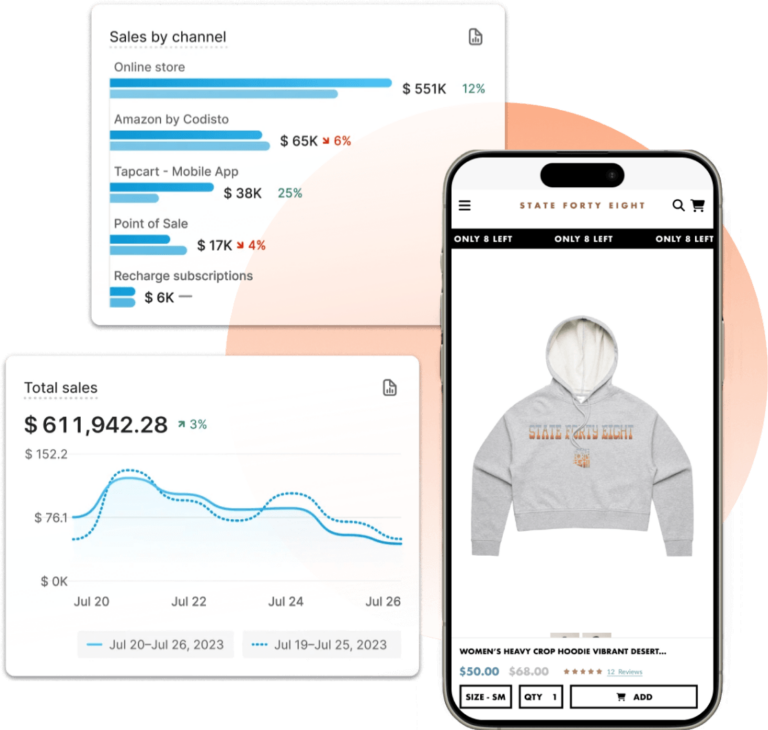
Unleash speed, adaptability, and reliability with Shopify’s unified commerce platform.
Ditch the Hybris maintenance burden. We migrate your catalog, customer hierarchies, and order history into a single high-performance Shopify Plus storefront, and keep the ERP and tax integrations your operation already depends on. No ImpEx scripts, no custom Java extensions, no waiting on a sprint to change a price.
Common Struggles from SAP Hybris Users
- A version that’s past end of maintenance
- Every storefront change needs a Java developer
- Custom extensions that break on every upgrade
- ImpEx workflows only one person understands
- Infrastructure and DevOps you must staff for
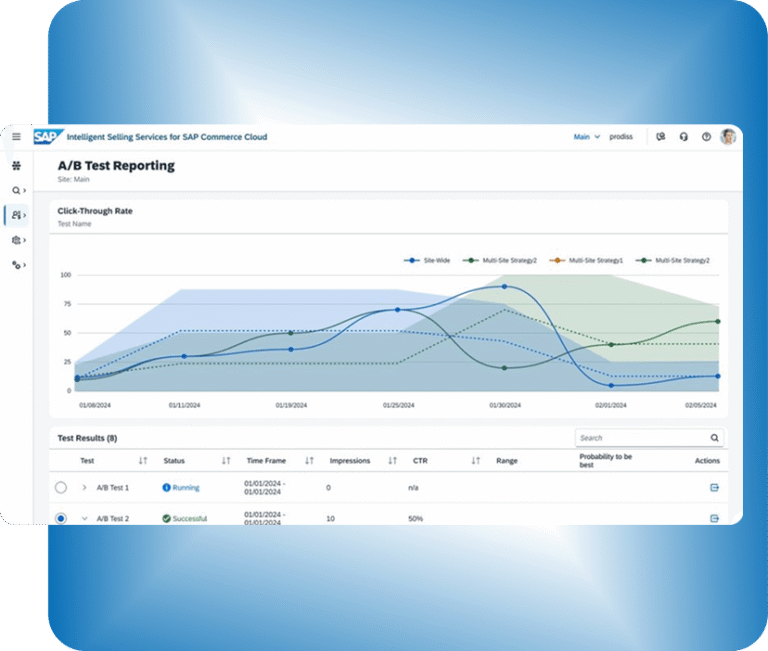
Expert Support Every Step of the Way
We ensure your transition is zero-downtime and zero-stress.
Frequently Asked Questions
All of Your SAP Hybris to Shopify Migration Questions Answered
SAP Hybris support ended July 31, 2026. What does that actually mean for our store?
Mainstream maintenance for SAP Commerce on-premise closed on that date. SAP no longer ships security patches, compliance updates or platform fixes for it. Your store keeps running, but every newly disclosed vulnerability in the platform, its Java runtime or its dependencies is now yours to mitigate, indefinitely.
Can't we just buy extended maintenance from SAP?
Customer-specific maintenance agreements are available and they’re a reasonable tactical bridge. Understand what they cover: access to fixes released before the cutoff. Newly discovered vulnerabilities are not addressed. It buys scheduling room for a migration, not a long-term position.
Is running unsupported Hybris a compliance problem?
It becomes one. PCI DSS 4.0 expects software supported by the vendor with a defined patching path, and auditors increasingly ask the question directly. The same applies to internal security reviews, cyber insurance renewals and enterprise customer vendor assessments. Most clients come to us after one of those flags it, not before.
What are our options: SAP Commerce Cloud or a replatform?
Two honest paths. Lift to SAP Commerce Cloud (CCv2) and stay in the SAP ecosystem with its licensing and Java release cadence, or replatform to Shopify Plus and shed both. We’ll tell you when CCv2 is the better fit. Deep S/4HANA coupling and highly specialized B2B logic sometimes justify it. For most mid-market and blended B2B/DTC brands, it doesn’t.
What do you migrate from SAP Hybris to Shopify Plus?
Product catalog and variants, classification attributes, category structure, media, price and tax rows, customer records, a prioritized window of order history, CMS content, navigation and available SEO metadata. Exact item types and record counts are confirmed in Discovery and documented in the SOW.
How do you extract data from an old Hybris install?
Through ImpEx exports via HAC, direct database extraction, and the Data Hub or integration layer where one exists. On installs running 5.x or 6.x we frequently work database-first, because years of custom items.xml types mean the shipped export tooling no longer reflects how the catalog is actually modeled.
Our Hybris install is heavily customized. Is that a blocker?
No, but it’s the main driver of scope. Discovery inventories every custom extension and type. We follow a native-first approach: replicate with Shopify features or vetted Plus apps where possible, and propose custom Shopify apps or middleware where parity genuinely requires it. Plenty of custom extensions turn out to be workarounds for Hybris constraints that Shopify simply doesn’t have.
What happens to our Accelerator storefront?
The JSP-based B2C or B2B Accelerator storefront is retired and rebuilt as a Shopify Online Store 2.0 theme carrying your brand and UX. We don’t attempt a pixel-perfect clone of a storefront designed around 2015-era platform constraints. The point of the move is to stop inheriting them.
How do you preserve SEO and existing Hybris URLs?
We map every URL earning traffic, including Hybris product-code paths, category paths and any legacy patterns from earlier redesigns, then implement a 301 redirect plan. Metadata migrates where available, and pre-launch and post-launch crawls remediate 404s and confirm canonical and hreflang rules.
Can you migrate customer accounts and passwords?
Customer records migrate. Hybris password hashes aren’t portable to Shopify, so we migrate accounts and trigger a secure password reset or login invitation flow. Timing and customer communication are planned in Discovery so the reset doesn’t collide with a promotional send.
Will you migrate order history?
Yes, scoped in Discovery. A rolling 12–24 month window is typical, though longer ranges are supported when finance or warranty requirements demand it. We plan for order number preservation, tax and accounting reconciliation, and returns mapping.
How do B2B unit hierarchies and approval flows map to Shopify Plus?
B2B units, cost centers, budgets and approval workflows map to Shopify Plus Companies, Locations, Catalogs and payment terms, with approval gates handled through Shopify Flow or a custom app where native primitives stop short. Required wholesale behavior is documented in Discovery and matched to what Shopify can actually enforce.
What about integrations to SAP ERP, PIM and fulfillment systems?
Existing IDoc, Data Hub and middleware flows are re-pointed at Shopify, typically through middleware or a proxy app that normalizes payloads, manages rate limits and provides logging. Ownership of inventory, pricing, order and tax sync, including error handling, is defined in the SOW.
We can barely staff Hybris developers anymore. Does Shopify help?
Materially. The Hybris talent pool has been shrinking for years and post-EOL it will shrink faster, which is a real operational risk regardless of platform preference. Shopify’s developer market is deep and its ecosystem is well documented, and most day-to-day merchandising and content work stops requiring a developer at all.
Can we replicate our Hybris checkout?
Shopify’s checkout is SaaS-managed. Branding, supported configuration and Checkout Extensibility are included; deep server-side checkout logic is scoped separately and implemented only where Shopify Plus allows it. We identify unsupported customizations in Discovery, not at UAT.
How long does a SAP Hybris to Shopify migration take?
It depends on catalog complexity, custom extension count and integrations. Typical engagements run 6 months; multi-site consolidations or heavily integrated programs commonly run 6–9 months. Given that support has already lapsed, we can sequence risk-reduction work early rather than waiting for full cutover.
What is the launch process and post-launch support?
Phased delivery: Discovery, Design and Development, QA and UAT, Launch, and hypercare. Launch readiness criteria, cutover steps and rollback contingencies are defined in the SOW. Hypercare and operational training are included.
What is typically out of scope?
Hybris server-side extension code that can’t reasonably be replicated, unsupported checkout engine modifications, fully custom theme builds without separate agreement, large-scale BI or data warehouse replacement, and ongoing Hybris maintenance during the project. Out-of-scope items are documented and handled via Change Order.
What should we prepare for Discovery?
HAC and Backoffice access or database exports, a list of custom extensions and items.xml types, your current Hybris version and patch level, a catalog of integrations and third-party providers, sitemap and analytics access, and any regulatory or localization requirements.
Stop maintaining a platform that stopped moving.
We specialize in moving enterprise catalogs off SAP Hybris without losing the integrations that run your business. Our migration strategy replaces legacy Java extensions and DevOps overhead with a platform your team controls directly, lowering total cost of ownership while improving conversion.
Get a quote from our ecommerce experts
LET’S SCALE YOUR STORE