How the Frank Lloyd Wright Foundation Unified Its Museum Retail on Shopify POS


TL;DR
What We Shipped
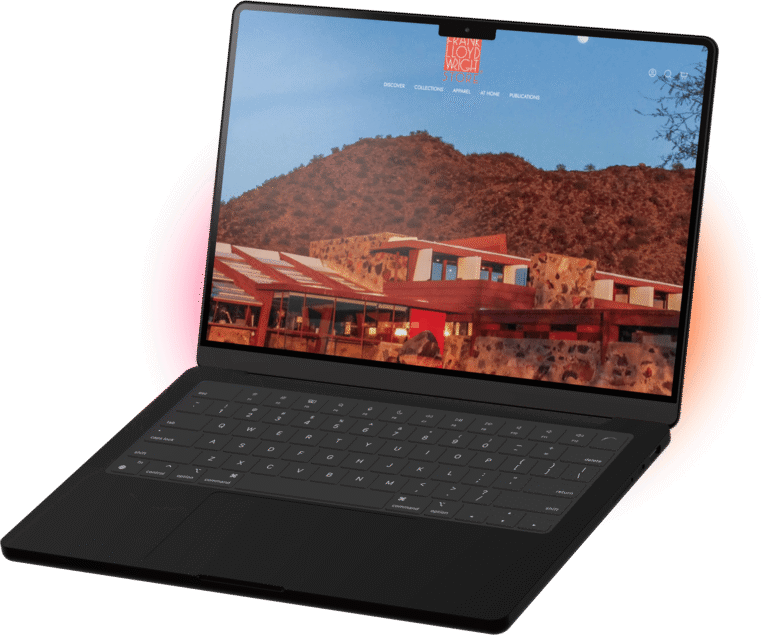
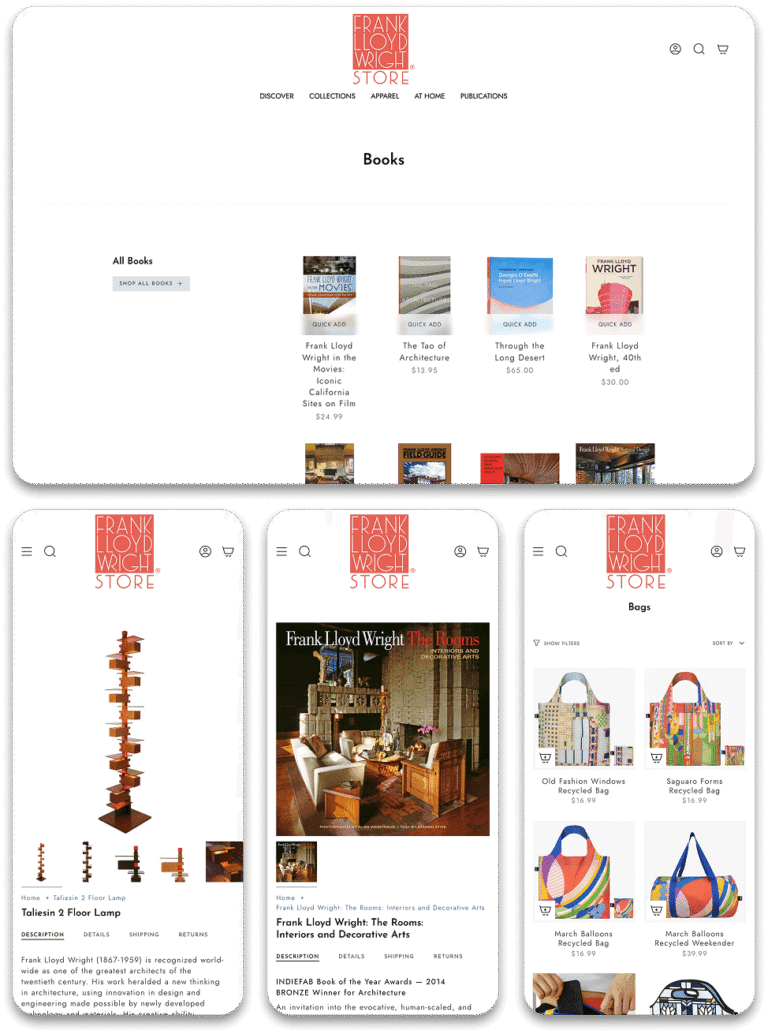
The Frank Lloyd Wright Foundation was running its museum-store retail on aging Counterpoint software. Fyresite migrated the entire operation to Shopify and Shopify POS, making Shopify the single source of truth for products, inventory, and in-person sales.
Migrated off Counterpoint
Moved the full product catalog from legacy Counterpoint retail software onto Shopify.
Shopify POS in the Stores
Stood up Shopify POS so in-person and online sales run on one unified system.
Single Source of Truth
Consolidated products, inventory, and sales into Shopify, with no separate ERP to maintain.
Clean Barcode System
Cleared inconsistent legacy barcodes and generated fresh, unique barcodes across every product variant.
Inventory & Purchasing
Configured inventory and purchase-order workflows for receiving and restocking across the stores.
Accounting-Ready Reporting
Mapped cost, vendor, and tax data so financial reports reconcile, with hands-on CFO training.
The Frank Lloyd Wright Foundation needed to retire aging retail software and bring online and in-store sales onto one platform. Migrating to Shopify and Shopify POS gave the Foundation a single, modern system to run its museum stores and fund its mission.
Industry
- Consumer Goods
- Homegoods & Retail Brands
Services
- E-Commerce Migrations
- Omni-Channel Set Up
- Shopify
- Shopify POS
The Problem
The Frank Lloyd Wright Foundation preserves Wright’s legacy and operates museum retail that helps fund that mission, but its stores were running on Counterpoint, an aging retail platform that had become a liability. Product data was scattered and inconsistent: exports ran to more than 250 columns, many SKUs were duplicated across variants, and only a small fraction of products carried usable barcodes. That made day-to-day retail management slow and error-prone.
The bigger issue was fragmentation. Online sales, in-store sales, and inventory were running across systems that did not talk to each other cleanly, which made inventory counts, purchasing, and financial reporting harder than they needed to be. As a nonprofit, the Foundation also had real tax complexity, since not all products are taxable, and its finance team needed cost, vendor, and tax data clean enough that accounting reports would actually reconcile.
The Foundation needed to retire Counterpoint, bring its retail onto one modern platform, and do it without leaving behind messy data or technical debt that would haunt the team after launch.




The Solution
Fyresite migrated the Foundation’s retail operation onto Shopify and Shopify POS, with Shopify serving as the single source of truth for products, inventory, and sales across both channels. Online and in-person museum-store sales now run on one platform, and because everything lives in Shopify, there was no ERP to connect or maintain, which removed a whole layer of cost and fragility from the operation.
The core of the work was the data. Fyresite exported the catalog out of Counterpoint through Matrixify, worked through a messy export of more than 250 columns, reduced it to a clean working set, and rebuilt the catalog so every variant carried a unique, POS-ready SKU, removing discontinued products and normalizing variant data along the way. The barcode system was rebuilt the same way. Rather than patch an inconsistent set where most products had no usable code, the team wiped the slate and generated fresh, unique sequential barcodes across the entire catalog, using a system that keeps assigning clean codes automatically as new products come in. On-site, Fyresite set up the barcode printers so the stores were ready to scan on day one.
From there, Fyresite set up the day-to-day machinery of a modern retail operation: inventory and purchase-order workflows for receiving and restocking, automated purchase orders for dropship items that stay out of inventory tracking, and tax handling tuned to a nonprofit’s mixed taxable and non-taxable catalog. To make sure the numbers held up, the team aligned cost and vendor data so accounting reports reconcile, and trained the Foundation’s finance leadership directly on reconciliation.
The result is a single, modern retail system the Foundation’s own team, which includes a capable in-house Shopify resource, can confidently own and run after launch, backed by clean data and built for ongoing improvement rather than constant firefighting.
Custom Features
What we engineered
Counterpoint-to-Shopify Migration
Pared a 250-plus-column legacy export down to the essentials and rebuilt the catalog with unique, POS-ready SKUs.
Self-Maintaining Barcode System
Cleared legacy barcodes and auto-generated unique sequential barcodes for every variant, continuing to assign clean codes to new products with no duplicates.
Dropship PO Automation
Automatically generates purchase orders for dropship orders and keeps those items out of inventory tracking.
Tax Field Mapping
Mapped Counterpoint's tax status to Shopify's per-product tax setting so nonprofit and taxable items are handled correctly.
Accounting Data Alignment
Mapped cost and vendor data so COGS and financial reports reconcile against the new system.
Inventory & Purchasing Setup
Configured purchase-order and receiving workflows for museum-store restocking.

Integration Solutions
 Shopify
 Shopify POS
 Matrixify
 Multi-Label Barcodes
 Thrive
 Multi-Mail

Got a tech problem?
Let's solve it together