 Taylor Simmons
In today’s economy, everyone is always looking for the best deals. Even when users put items in their cart to checkout, there’s still a chance that they’ll abandon it for a better price somewhere else.
So, how can you catch these customers before they abandon their carts? Price matching. More specifically, offering price matching in the checkout.
What is Price Matching
Price matching is a competitive pricing strategy, where a store will lower the cost of an item they are selling to match a lower price.
Types of Price Matching
Contrary to popular belief, there is more than one way to price match. One way isn’t better than the other, but one might be a better fit for your brand.
Traditional Price Matching
Traditional price matching is the type that most people think of when they hear price matching. It’s when a merchant matches the price of an item to the price competitor is charging for the identical item.
This is most commonly seen with big brands, such as Target, who will match the price of other big brand competitors.
Refund Price Matching
This type of price matching is not seen as frequently. This type of price matching requires a merchant to price match themselves. If a customer buys an item that goes down in price within a certain time frame (such as within 7 days), a refund price match will refund the difference between what the customer paid and what the new price is.
This is ideal for smaller brands that want to retain customer loyalty.
Pros and Cons of Price Matching
Everything has pros and cons, and price matching is no different. Here’s some pros and cons for price matching.
Pros:
- Customer Trust & Retention
- Price matching makes customers feel like they are valued, and are more likely to return
- Increased Business
- Price matching adds incentive for customers to shop at your store, rather than a competitors
- Higher Conversions
- Getting the best guaranteed price helps prevent customers from abandoning their cart and completing the conversion
Cons:
- Cuts Into Profit Margins
- Items are priced for profit. Price matching can cut into those profit margins, and even cause a loss on the sale if you’re not careful
- Increased Workload
- If you choose to price match manually, it takes time and effort to verify
Showcase: Fyresite’s Custom Price Matcher for Funlove
Funlove, a Shopify retailer of adult entertainment and accessories, was having an issue: customers were leaving their carts at checkout for cheaper prices. Tired of abandoned carts, they reached out to Fyresite for a solution.
Our Custom Checkout Price Matcher
This wasn’t a one-size-fits-all app that we added to their Shopify store. The Fyresite team built this custom solution that allows Funlove’s customers to make sure they’re getting the best deal.
How it Works
Our custom price checker is a powerful tool. When a customer views their cart or goes to checkout, they’ll see a button that says Price Match. When they click on the button, our solution searches through competitor pricing to see if there’s another store offering a lower price.
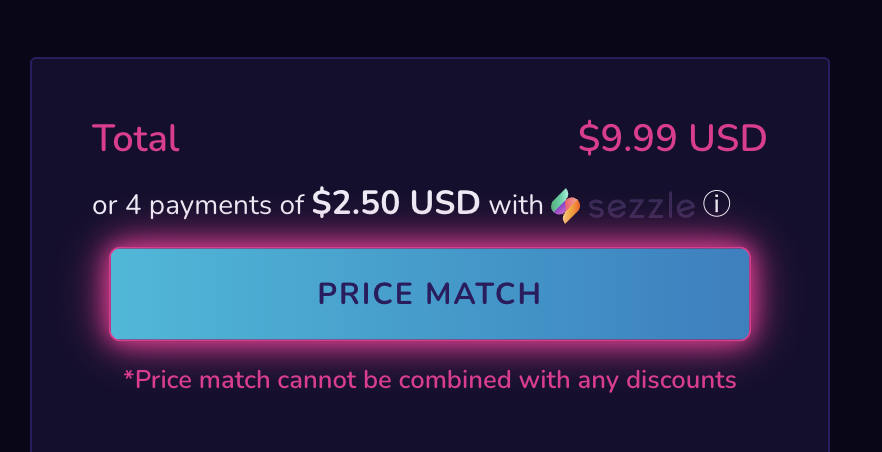
If there is, it will match the price. If there isn’t a better deal, then it informs the customer that they are already getting the lowest price.
Price matching can not be combined with coupons.

Get Expert Fyresite Help
Whether you are looking to migrate to Shopify Plus, optimize your current store, or build a custom headless commerce solution, the Fyresite team is more equipped than ever to lead the way.
Schedule your free consultation with the Fyresite team to get started today.